
Breakup, Divorce & Domestic Abuse
Awareness Accreditation
Detailed Course Breakdown
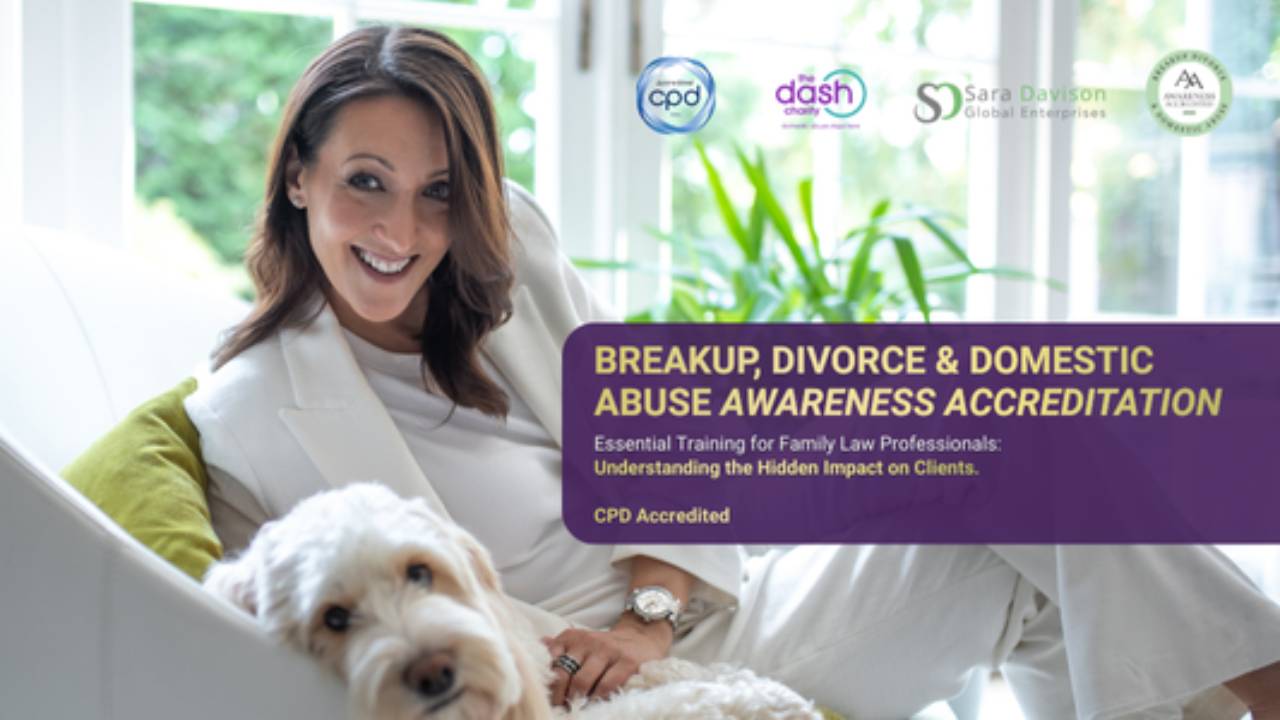
This CPD-accredited programme has been designed specifically for family law professionals working with separating families, vulnerable clients and high-conflict or abuse-related cases.
Below you’ll find a clear overview of what each module covers and what you will learn.
TRAINING FORMAT AT A GLANCE
4 hours of on-demand video training
120-page professional workbook
Practical tools, scripts and reference guides
Self-paced online learning (12 months access)
CPD-Accredited Certificate on completion
Individual and multi-pass options available
MODULE 1
The Hidden Impact of Breakup & Divorce
This module explores the emotional and psychological impact of separation and why client behaviour often changes dramatically during divorce.
You will learn:
Why breakup and divorce are psychological life events, not just legal processes
The Iceberg Effect — what professionals see versus what clients are carrying internally
The Loss Cycle and how grief affects instructions, behaviour and decision-making
Why trauma impacts memory, clarity and consistency
How emotional overload can present as avoidance, anger or indecision
Outcome:
You’ll interpret client behaviour through clarity rather than frustration.
MODULE 2
What Domestic Abuse Really Is
This module reframes domestic abuse as a pattern of control, not isolated incidents.
You will learn:
The full spectrum of abuse, including coercive control and financial abuse
Why many clients don’t recognise abuse while living with it
How abuse develops subtly through boundary erosion
Trauma bonding and why survivors may minimise or defend harmful behaviour
Outcome:
You’ll recognise abusive dynamics even when clients cannot yet name them.
MODULE 3
Spotting the Signs & Opening Sensitive Conversations
This module focuses on recognising risk and responding safely.
You will learn:
Behavioural, emotional and practical red flags professionals often miss
Why clients don’t disclose abuse — and what shuts disclosure down
Trauma-aware enquiry language that is ethical and professional
How to regulate conversations when clients become overwhelmed or frozen
Outcome:
You’ll feel confident noticing and responding without escalating risk or crossing boundaries.
MODULE 4
Abuser Tactics During Separation & Divorce
This module examines why abuse often escalates once separation begins.
You will learn:
How abusers shift tactics during divorce and proceedings
Financial, procedural and litigation abuse patterns
How legal correspondence can retraumatise clients
Practical steps professionals can take to reduce emotional harm
How to stabilise clients without increasing exposure
Includes the Davison Domestic Abuse Identification Tool™
Outcome:
You’ll understand how the legal process itself can be weaponised — and how to mitigate harm.

MODULE 5
Post-Separation Abuse: The Most Misunderstood Risk
This module focuses on one of the highest-risk stages for clients.
You will learn:
What post-separation abuse looks like in practice
Administrative harassment and message barrages
How children are often used as tools of control
Early escalation indicators
Stabilising frameworks to support clarity and safety
Outcome:
You’ll recognise heightened risk early and respond with informed caution.
MODULE 6
What Clients Expect (But Rarely Say)
This module explores the unspoken emotional expectations clients bring into professional relationships.
You will learn:
The “silent emotional contract” shaping behaviour
Why expectation mismatch causes friction
What clients need to feel safe, steady and able to engage
How trauma-aware communication builds trust and cooperation
Outcome:
You’ll improve engagement without absorbing emotional overload.
MODULE 7
Working With Clients in Crisis
This module equips you to remain calm and effective in emotionally intense cases.
You will learn:
What crisis is neurologically
The four trauma responses: fight, flight, freeze and fawn
How to reduce overwhelm and decision paralysis
Practical scripts and boundary-setting tools
How to protect your own emotional resilience
Outcome:
You’ll stay grounded and professional, even in high-conflict situations.
This training is:
Awareness-based
Trauma-informed
Grounded in real family law practice
Practical and immediately applicable
This training is not:
Therapy
Legal advice
A safeguarding or risk-assessment qualification
TRAINING FORMAT AT A GLANCE
4 hours of on-demand video training
120-page professional workbook
Practical tools, scripts and reference guides
Self-paced online learning (12 months access)
CPD-Accredited Certificate on completion
Individual and multi-pass options available
MODULE 1
The Hidden Impact of Breakup & Divorce
This module explores the emotional and psychological impact of separation and why client behaviour often changes dramatically during divorce.
You will learn:
Why breakup and divorce are psychological life events, not just legal processes
The Iceberg Effect — what professionals see versus what clients are carrying internally
The Loss Cycle and how grief affects instructions, behaviour and decision-making
Why trauma impacts memory, clarity and consistency
How emotional overload can present as avoidance, anger or indecision
Outcome:
You’ll interpret client behaviour through clarity rather than frustration.
MODULE 2
What Domestic Abuse Really Is
This module reframes domestic abuse as a pattern of control, not isolated incidents.
You will learn:
The full spectrum of abuse, including coercive control and financial abuse
Why many clients don’t recognise abuse while living with it
How abuse develops subtly through boundary erosion
Trauma bonding and why survivors may minimise or defend harmful behaviour
Outcome:
You’ll recognise abusive dynamics even when clients cannot yet name them.
MODULE 3
Spotting the Signs & Opening Sensitive Conversations
This module focuses on recognising risk and responding safely.
You will learn:
Behavioural, emotional and practical red flags professionals often miss
Why clients don’t disclose abuse — and what shuts disclosure down
Trauma-aware enquiry language that is ethical and professional
How to regulate conversations when clients become overwhelmed or frozen
Outcome:
You’ll feel confident noticing and responding without escalating risk or crossing boundaries.
MODULE 4
Abuser Tactics During Separation & Divorce
This module examines why abuse often escalates once separation begins.
You will learn:
How abusers shift tactics during divorce and proceedings
Financial, procedural and litigation abuse patterns
How legal correspondence can retraumatise clients
Practical steps professionals can take to reduce emotional harm
How to stabilise clients without increasing exposure
Includes the Davison Domestic Abuse Identification Tool™
Outcome:
You’ll understand how the legal process itself can be weaponised — and how to mitigate harm.
MODULE 5
Post-Separation Abuse: The Most Misunderstood Risk
This module focuses on one of the highest-risk stages for clients.
You will learn:
What post-separation abuse looks like in practice
Administrative harassment and message barrages
How children are often used as tools of control
Early escalation indicators
Stabilising frameworks to support clarity and safety
Outcome:
You’ll recognise heightened risk early and respond with informed caution.
MODULE 6
What Clients Expect (But Rarely Say)
This module explores the unspoken emotional expectations clients bring into professional relationships.
You will learn:
The “silent emotional contract” shaping behaviour
Why expectation mismatch causes friction
What clients need to feel safe, steady and able to engage
How trauma-aware communication builds trust and cooperation
Outcome:
You’ll improve engagement without absorbing emotional overload.
MODULE 7
Working With Clients in Crisis
This module equips you to remain calm and effective in emotionally intense cases.
You will learn:
What crisis is neurologically
The four trauma responses: fight, flight, freeze and fawn
How to reduce overwhelm and decision paralysis
Practical scripts and boundary-setting tools
How to protect your own emotional resilience
Outcome:
You’ll stay grounded and professional, even in high-conflict situations.
This Training is:
Awareness-based
Trauma-informed
Grounded in real family law practice
Practical and immediately applicable
This Training is not:
Therapy
Legal advice
A safeguarding or risk-assessment qualification
© Sara Davison Global Enterprises Ltd | Privacy Policy | Terms & Condition |